
Auto Industry News: Easter Jeep Safari Concepts, Hurricane Inline-Six, Audi In-Car VR, & Right to Repair
Jeep drops another Easter Safari teaser, while parent company Stellantis unveils a new inline-six. Over at Ford, the new Lightning EV puts up some impressive range numbers – even beating its own estimates. And speaking of next-gen vehicles, it appears virtual reality is coming to an Audi near you. The recent SXSW conference served up some wild new tech, with in-car entertainment taking a futuristic turn. Good timing then, that the Right to Repair just received another legislative push. The Engine Block unpacks some of the legal nuance and what it means for consumers like you.

Jeep Teases Easter Safari Concepts
Adventurous off-roaders flocking to the annual Easter Jeep Safari will enjoy more than challenging trail rides and epic desert views. As is becoming tradition, Jeep will bring several exciting new concept vehicles to the event. Each model will showcase potential new product in the pipeline while highlighting the brand’s customization-friendly designs.
Since February, the automaker has teased five concepts via press release. Jeep noted this year’s lineup would be “Bigger, Better, Greener, Faster Ultra-capable and Undeniable.” (A tall order, to be sure.)
- Sneak peeks from last month included “one 4xe electrified Jeep SUV” – likely a new hybrid Jeep Grand Cherokee.
- A particularly cryptic sketch of a QR-code Jeep Gladiator dropped too, showing what seem to be very large digital tires. The accompanying Jeep Performance Parts logo indicates the build will be a customizer’s dream. It’ll likely wear a catalog’s worth of factory-backed aftermarket accessories.
- In early March, the brand teased its next concept by drawing attention to the 20th Anniversary of the ultra-capable Wrangler Rubicon. This leads us to believe a special celebratory model is on the docket.
- The following week, Jeep teased a blended Gladiator-Wrangler of sorts, asking “What if a truck dared to be more like an SUV to increase its departure angle?” (A Wrangler SUV with an open bed, perhaps??)
- Just this past Friday, the automaker dropped its latest sketch. The design appears to show a plug-in hybrid Wrangler Rubicon that pays homage to Jeep’s military heritage.

Easter Jeep Safari is an annual event hosted by the Red Rock 4-Wheelers off-road club. Fervent off-roaders (mostly Jeep lovers) bring their highly-modified and capable builds to conquer the challenging terrain of Moab’s backcountry. This year’s event runs April 9-17, 2022.
Stellantis Rolls Out New Inline-Six “Hurricane”
Stellantis clearly seems committed to innovating hybrid and electric drivetrains. However, the brand has not thrown in the towel just yet on traditional internal combustion. This past week, the company announced an all-new twin-turbocharged 3.0-liter inline-six called the Hurricane. Available in two output versions, the new engine is expected to wind up under the hood of upcoming Jeep Wrangler and Grand Cherokee models, as well as Ram pickups and the Dodge Durango SUV.

A standard output option will deliver more than 400 horsepower and 450 pound-feet of torque, while a high-output version will pump out more than 500 horsepower and 475 pound-feet of torque. Those latter numbers place the engine on par with BMW’s strongest six-cylinder offering, notes Car & Driver.
The new ICE engines will actually help Stellantis with its EV transition, noted the company’s head of propulsion systems, Micky Bly. He said the Hurricane inline-sixes reduce carbon dioxide output as much as 15% compared with similar or larger Stellantis engines.
Stellantis dropped the inline-six from its lineup back in 2006 when Jeep swapped its 4.0-liter straight six for the 3.6-liter V-6. Interestingly, it is likely the new engines will head to the Jeep brand first. Automotive News reports a short-lived photo of the engine appeared on the Grand Wagoneer’s online configurator as a $2,000 option.
Stellantis joins several other brands in adding a new inline-six, including Mercedes and GM which each launched new versions in 2016 and 2020, respectively. Ford pioneered the twin-turbo, six-cylinder technology more than 10 years ago with its 3.5L EcoBoost V-6 – now the best-selling F-150 motor.

Ford F-150 Lightning Bests Itself, Delivering 320 Mile Range
Speaking of pioneering Fords, the Blue Oval adds another tick to its innovation tally. The automaker announced its electric F-150 Lightning’s mile range tests came in about 7% better than expected. According to the EPA, the electric pickup will deliver as much as 320 miles of range.
While true numbers will vary by battery pack and trim level, it appears every single model using the automaker’s extended range pack topped initial forecasts. Unfortunately, customers looking for such an upgrade will need to shell out a hefty sum for the privilege – roughly $19,500, thanks to some tricky option bundling.
Additionally, Ford is limiting the bigger battery pack option to the XLT and Lariat trims. (It is standard on the top-tier Platinum trim.) As Motortrend points out, that means the cheapest 300-mile-range F-150 Lightning available will cost about $74,169. Quite a far cry from that democratic $40k price tag circulating in press releases, eh?

Regardless of pricing, Ford expects high demand. The automaker capped reservations at 200,000 in January and announced it would increase annual production capacity from 80,000 to 150,000. Long wait times seem inevitable, however, as some customers already reported receiving notes that production of their Lightning model had been pushed back due to unspecified delays. A Ford spokesperson said these notes were sent in error, but it does seem unlikely that the automaker will be able to keep its June 2022 target date for production launch.
Future Cars: AV, AI, and Academy Award-Level Entertainment?
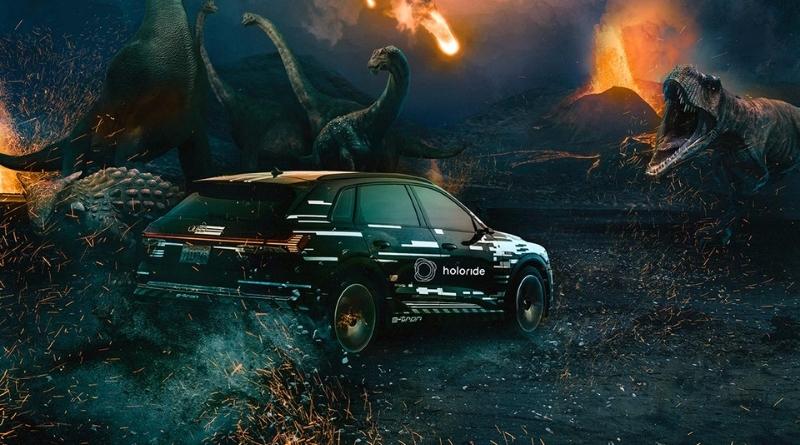
As more autonomous features take over the nuanced aspects of driving, automakers are finding new ways to fill the gaps in our attention spans. At CES, BMW introduced its rear-seat cinema lounge, complete with a 31.3-inch panorama screen display, 8K resolution, and 5G connectivity. More recently, Jeep rose eyebrows when it announced the addition of Amazon Fire TV in its new Grand Wagoneer. This month, at the SXSW conference, tech company Holoride announced its headset-based virtual-reality entertainment system will debut in certain Audi models. The trippy new technology could arrive as early as this June.
The Holoride system blends augmented reality with the physical world – similar to how a Snapchat filter works. In this case, however, passengers will enjoy a VR experience that is motion-synchronized to their car journey. Aiming to deliver a “hyper-immersive” experience where “you really start to feel what you see,” Holoride’s back-seat entertainment software is brand-agnostic. This means it will likely start popping up in other company’s vehicles pretty soon, too.
Curious what a car ride looks like in the Holoride universe? Check out the video below.

Did you know…?
Mercedes expects to launch its Drive Pilot autonomous driving system in the U.S. later this year. When engaged, the Level 3 system will take control of the car’s speed, steering, and brakes. The technology will even be available on certain highways, but only when traveling below 40mph.
Bitter Rivals Unite (For Now)
In an attempt to combat its current driver shortage, Uber will now list NYC taxis on its app. Partnering with the very industry it decimated roughly a decade ago is certainly an interesting move on Uber’s part – and one which has traditional cab drivers expressing some skepticism.
Under the alliance, NYC taxi drivers who accept Uber customers will be subject to Uber’s payment formula, not the yellow-cab metered fare. This means cab drivers may earn more, less, or the same as Uber drivers depending on the trip or any surges that may be in effect. To counteract the financial ambiguity, taxi drivers will be able to see fares prior to accepting a ride to determine expected earnings… a feature that traditional Uber drivers do not have.
While Uber already has partnerships with taxi companies around the world, it’s safe to say New York is its own animal. We’ll be watching this one unfold – likely with a bucket of popcorn on deck.

Right to Repair Bill Update
Right to Repair is back in the news, as recently introduced legislation makes its way through Congress. The bill, named Fair Repair Act of 2022, is the Senate version of a similar bill introduced in the House this past summer. Both proposals aim to codify a right to repair by requiring manufacturers to provide the tools and resources that consumers and third parties need to repair digital electronic equipment. If turned into law, the legislation would be enforcable by the FTC and state attorneys general.
So, What’s the Big Idea?
Essentially, consumer products are becoming increasingly complex to fix and maintain. Not only are special tools and parts often necessary, but also detailed schematics or even diagnostic software. The legislation says OEMs need to make these things available so consumers have more power-of-choice when it comes to repairs – and so less devices, vehicles, and products wind up in landfills.
Manufacturers claim that providing repair shops access to their diagnostic software will violate intellectual property rights or potentially open them up to cyberattacks. They also claim safety risks in letting an independent repair shop crack open a device and replace failed parts.
The concerns have merit, as the recently proposed act does not exempt security-related functions like phone screen locks. It also has very little to say regarding manufacturer liability. For example, if a consumer is injured due to improper repairs – say, a cell phone battery catching on fire – the manufacturer can still be sued. And even though they stand a good chance of the case being dismissed, time and money must still be invested in a defense.

Gaining Momentum
Right to Repair bills have been in play for decades, but picked up significant momentum in the last couple years. The pandemic, in particular, threw manufacturers into an uncomfortable spotlight, when it became painfully clear just how difficult it is for hospitals to repair their own life-saving medical equipment.
While nearly all state bills have stalled shortly after being introduced, some federal progress has been made. In 2020, the House advanced a funding bill requiring the FTC to complete a report on anticompetitive practices in the repair market. Cleverly dubbed “Nixing the Fix,” the report found “scant evidence to support manufacturers’ justifications for repair restrictions,” encouraging the commission and legislators to explore more consumer-advocacy proposals.
Additionally, this past July, President Biden issued an executive order which endorsed the “Right-to-Repair” concept. While largely just lip service, the EO seems to be nudging legislators toward action. Whether that ends in any resolution remains to be seen. It’s worth mentioning big tech companies like Apple, Google, and Microsoft do not support Right to Repair legislation – and their lobbying dollars often speak louder than words.
The Engine Block is your one-stop source for any and all auto industry news. Keep an eye on our weekly round-up of enthusiast coverage, product reviews, vehicle spotlights, auto show/expo features, and more. Be sure to check back Wednesday for a rundown of exciting new off-road products. Debuted at SEMA and hitting the product pipeline soon, these are items you don’t want to miss.


