
Tech Corner: Tips & Tricks for Removing Stubborn Car Stains
Does it get any better than a freshly cleaned vehicle? Even if it’s your beater, that roomy, refreshing feeling is hard to beat. However, sometimes despite all our vacuuming, scrubbing, and buffing, there remain those few stubborn car stains that ruin the bliss of an otherwise spotless vehicle.
With all the different types of upholstery fabrics and dedicated cleaners on the market, combating these blights can feel overwhelming. How do you know what’s safe to use? Here’s a helpful how-to that will put you on the right track to a truly clean car.
Get to Know the Material
Often, the first step to removing stubborn car stains is knowing what caused the stain. But more important, is the step before that step—knowing what kind of material you’re dealing with.
Leather, cloth, suede, vinyl, and alcantara are all materials commonly found in vehicles, and each one requires different cleaning approaches and chemicals. So, from now on, Step 1 is to research the material so you don’t make an already stubborn stain worse.

For example, in our piece on leather care, we pointed out that cleaning leather requires a delicate touch and sometimes even special brushes, as the material can easily tear. Similarly, a fabric like suede can be tricky to treat when stained, as its texture responds poorly to most chemicals.
Pro tip: Check your vehicle manufacturer’s website for cleaning tips, as they will likely pertain to your exact make and model’s materials. Additionally, many dealership blogs offer vehicle-specific cleaning advice as well.
Get to Know the Stain
Now that you’re a little more familiar with the material, get in there and learn what type of stain has settled in. Stubborn car stains can be caused by so many things, but there are a few repeat offenders. Burning your legs to hell with coffee, your taco losing its guts on the seat, that pen exploding in your pocket, transferring grease from your work pants—and let’s not forget about those mysterious blood stains in the trunk. (It’s okay, your secret’s safe with us.)
ANYWAY, the idea is to approach each scenario with a combination attack. Both the stain and the material type are going to dictate how you tackle the issue, what cleaners and equipment are safe to use, as well as when to act. For example, some stains like dirt and coffee need to be addressed right away. Others, such as ink, blood, and grease may need to set and be approached after a few moments in order to prevent spreading.
Pro Tip: Resist the urge to “treat” a fresh stain with water unless you plan on finishing the cleaning job right then and there. Sometimes, almost getting the stain out can end up making things worse than if you just left it alone.
Get to Know the Cleaner
You can’t properly remove stubborn car stains if you don’t have the right elixir. Just blindly dumping chemicals on fabrics and materials will do more harm than good, so do some research and read those labels.
Cloth seats have a wide range of product that can be used, but it’s still good to practice some balance in application. Something like Turtle Wax Upholstery Cleaner—which includes a handy, detachable MicroScrub brush head—is great for cleaning up coffee, everyday dirt, and even some grease and oils. But if you’re looking at some serious car stains like pet urine or vomit, you may want to invest in some dedicated brushes and an enzyme cleaner, which uses bacteria to break down organic compounds.
Leather and vinyl aren’t as flexible, so you should be turning to dedicated cleaners and conditioners over the general-purpose stuff on the shelf. Admittedly, vinyl is the more forgiving of the two, and can sometimes be approached with some mild dish soap, but leather is a different story. You will want to reach for products like Lexol, Pinnacle, Armor All, and Meguiar’s leather cleaners. As we will discuss later, the tools will do most of the work here.
For alcantara and suede owners, I’m just going to say working proactively is your best friend here. Because of the ability of the fabric to absorb moisture, you want to introduce as little chemicals as possible. A simple approach of water and a microfiber to pull the stain from the fabric is the safest bet. Sometimes, you can use ethyl alcohol if you’re dealing with something more stubborn.
Pro Tip: Don’t be afraid to break out the proven home remedies on less delicate materials. Oxy-Clean, baking soda, dish soap, vinegar, and even vodka can all work miracles on stubborn car stains.
Get to Know the Tools and Equipment
As mentioned, a microfiber is useful for materials like alcantara and suede, but it’s a handy tool for other fabrics as well. Additionally, for cloth, a general upholstery brush can work wonders, while for leather and vinyl, lighter brushes with synthetic or horse hair bristles will be what you want. A scuff pad is also worth having on hand.
With any stain, it’s important to choose your tool carefully and not just jump to the most aggressive means possible. The idea isn’t to tear the stain away. Instead, your goal is to get the cleaner into the material and loosen up the stain. Then, you want to pool the stain to surface through gentle scrubbing, at which point you can wipe or pull the moisture away before it has a chance to settle back in. The more abrasive the tool, the better chance you have at damaging the material. So, it’s safer to start mild and work your way up to something tougher.
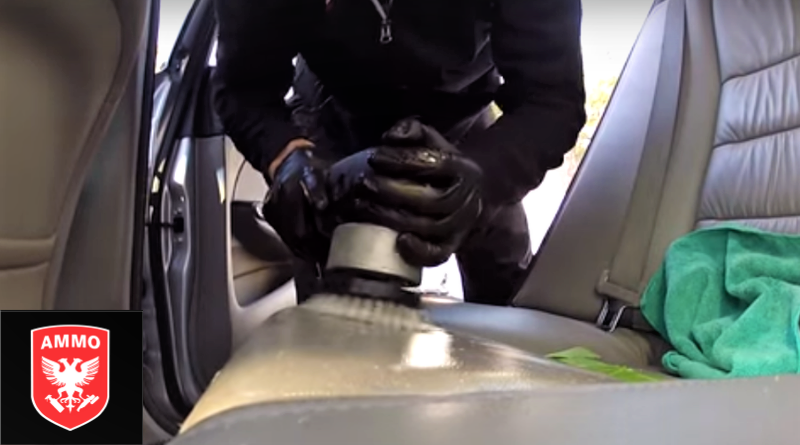
Aside from a vacuum, there are actually some “power tools” that you may want to consider when tackling stubborn car stains. Polisher attachments can be used for leather, although we don’t generally recommend these unless you have a trained hand, as it’s easy to get carried away and damage the material. Steam machines, however, can be very helpful at loosening up lingering stains and pulling them to the surface.
Pro Tip: Steam cleaners sure do make life easier but can cost a pretty penny to purchase. A decent model can easily run over $100. If the likelihood of you using it more than once is slim-to-none, consider renting yours for the day.
Get to Know What You Don’t Know
We’re all for DIY around here, but sometimes it’s time to call in the professionals. If you’re facing just a few light stains, there’s a good chance you can handle that on your own. But if you’re not familiar with the territory, you can find yourself spending the same amount of money on chemicals as you would on a professional detail. Not to mention, you may wind up spending way more time learning how to tackle this issue than you would with a professional appointment.
Also, if you’re dealing with some really stubborn car stains on a leased vehicle or something you intend to flip, a professional touch will ultimately keep the most money in your pocket at the end of the day.


