
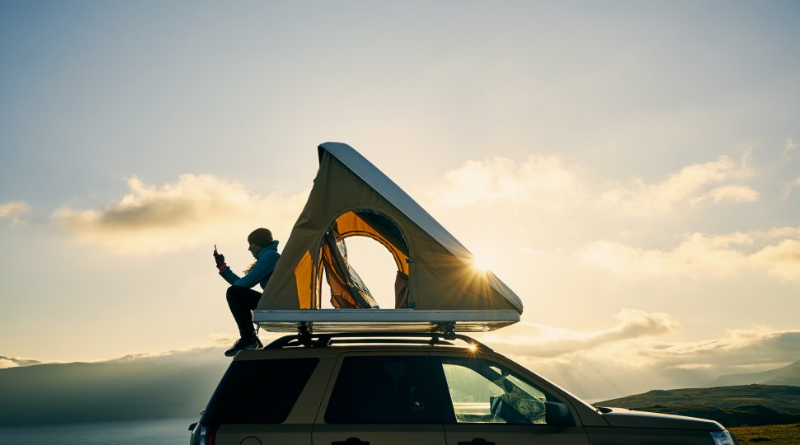
Overlanding: Lifestyle, Movement, or Cash Cow?
Car Camper. Nomad. Tin-Can Tourist. Overlander. At the end of the day, they’re all the same thing. Or, at least, that’s what online overlanding community, Overland Bound (OB), says is the case.
To OB, overlanding is simply “vehicle-dependent travel.” Period. That’s it. We need to quit “over-defining” overlanding, they say, and work to “broaden the definition.”
While I appreciate the welcoming sentiment behind OB’s manifesto, my first thoughts upon reading that were: Whaaattt? Why in the world would you intentionally paint broad brush strokes all over a niche activity, thereby opening your arms to an entire group of people merely faking the funk?!
What could they possibly bring to the table?

Y’all Are Welcome!
“We want to encourage all types of folks, from all different backgrounds, with all different means to participate in overlanding because we feel that adventure is necessary,” says Michael Murguia, on Episode 19 of the Overland Bound podcast, titled What is Overlanding? “We all need adventure in our life to be healthy and happy humans and we want to encourage people to participate in any way they can.”
While that sounds like something you print on a ceramic mug, I will admit that the man makes one very fair point: No one should feel left out simply because they can’t afford a six-figure setup, or because the closest they got to nature when growing up was the city park. That’s silly. There are no “demographic pre-req’s” to being an overlander. If you join the movement in your 40’s because you’re craving adventure or you’re born into it because your Dad thinks he’s the reincarnation of Marco Polo—both are valid reasons for enthusiasm.
Same goes for whether that rig is vintage or new, owned or financed, rocking hand-me-down accessories or all the latest and greatest gear. In this sense, I think we can all agree: the more the merrier.

Hereeee’s where things get hairy, though.
Under this new definition—is a Subaru Forester driving along marked roads in Yosemite overlanding? What about the $150,000 Thor motor coach your retired neighbors take cross country every year? Is that overlanding? And what about the guy who spends $7k on a custom deluxe trail kitchen so he can still enjoy his signature Bolognese with a vintage Chianti while camped 10 miles south of the ‘burbs?
Overland Bound, aside, I think most people would answer an emphatic NO. Because, while we may not be able to agree on what overlanding looks like, exactly, we seem to have a pretty good idea in our heads of what it doesn’t look like.
And so here we find ourselves. Locked in an identity debate over the proper way to label a group of automotive/outdoor enthusiasts.
Why Does It Matter?
Well, just like OB argues against “over-defining” overlanding, many enthusiasts argue against “over-simplifying” it. It’s more than just depending on your vehicle, they say, it’s about depending on yourself. It’s a culture built on meaningful adventures, bolstered through steadfast ideals like self-reliance, environmental stewardship, grit, and a talent for safely and successfully pooping in the Great Unknown.
Yes, erasing any line of exclusivity encourages new people to jump on board, bringing with them manufacturer support and product innovation. But it also welcomes the straight-up consumers—trend-hoppers who see this merely as a fun fad to dabble with for a little while until they grow bored and move onto something else. People who deck out brand-new rigs with brand-new gear, most of it unnecessary and all of it intended for adventures much more rugged than their own.

But this is about more than a fear of “watering down” the movement’s authenticity.
Sure, newbies with deep pockets and shallow commitment are annoying. But some of them will likely develop a true appreciation over time—especially if they join a local club or sign up for some educational classes at an expo. In that sense, no harm no foul.
The problem comes when they’re more concerned with social media likes than learning actual mechanical and survival skills such as proper recovery tactics, tool use, and safety protocols.
4×4 enthusiasts already face enough negative stigmas.
“With more interest in the hobby comes more ideas, more stories, more aftermarket support, and hopefully a greater awareness of the outdoors and why they are important,” says one Overland Bound forum user. “However, with the good also comes the bad: those who are looking down upon others because they can’t (or don’t want to) afford top-of-the-line gear, those who destroy lands by doing ‘hold my beer and watch this’ kind of antics, and those who are just all around jerks making the community look bad.”
From learning proper fire safety and Tread Lightly practices to simply showing respect for the low-budget newcomers and “Overworkedlanders” who can only make the most of minimally-equipped rigs and part-time adventures, there’s an education gap in the market that needs to be closed. Especially as special interest groups—from environmentalists to development companies—work overtime to block motorized access to an ever-increasing amount of public lands.
Shake Your Money-Maker
This isn’t about gatekeeping the overlanding lifestyle. There is real value in enthusiastically welcoming new people—yes, even the temporary bandwagoners. All that light they’re shining on the segment? That allows manufacturers to better see their target. And if SEMA was any indication—they are FIRING innovative new product at full blast.

From recovery gear and cargo management to exterior protection and clever convenience accessories, the overland lifestyle permeated virtually every aspect of this year’s show in Las Vegas.
Even items normally marketed to specific segments, such as off-roaders (WARN winches), professional tradesmen (Rhino-Rack contractor racks), and camping enthusiasts (the RSI SmartCap truck cap), were displayed on overland vehicles dressed for rugged, off-grid adventures.
Take DECKED’s drawer systems for example.
Another item usually relegated to the work truck sect—DECKED proved it was up to the rigors of adventure by popping up on a variety of overland-ready rigs. And it’s easy to see why.
DECKED’s impact-resistant, weather-proof storage systems not only maximize organization and efficiency, but also completely re-imagine the truck bed—a trait in league with the entire overland psyche. “One of the things – among many – that makes DECKED cool is its ability to be accessorized in a way that’ll suit your specific needs,” says the company. “In addition to the variety of accessories we offer, you can use DECKED with a host of products to maximize vehicle efficiency.” Products like BedSlide and CargoGlide systems, Kaizen Foam Inserts, Koplin gun racks, and even the aforementioned RSI SmartCap truck cap.
For SEMA, DECKED debuted the most recent addition to its modular storage family, a soft-sided relative of the D-Box, cheekily named the D-Bag. Designed to nest in the DECKED drawers, it consists of a hard foam base with a rugged thermoformed lid. What we found most interesting though? The integrated straps that allow it to be used as a backpack or duffel, completely maximizing versatility for those situations where you need to hoof it on foot. The company expects to release them sometime around April 2020. (Just in time for an overlanding rally!)

But perhaps no item was showcased quite like the rooftop tent.
(Well, save for the Jeep Gladiator. Apparently, every single one sold since its release was on display at SEMA 2019.) Outside Magazine reports that rooftop-tent companies have grown by over 400% in the past 5 years, with available models now counting in the hundreds. 400 percent! Whether you think they’re innovative or useless, you have to admit that is some impressive growth.
What’s more, we’re now seeing niche companies like rooftop-tent maker, Tepui, and solar shower system manufacturer, Road Shower, get picked up by aftermarket bigwigs. (In this case, Thule and Yakima respectively.) You can expect more of these tailored acquisitions as the overlanding movement continues to swell.
Which begs the question: Is overlanding in danger of becoming less about connecting with nature and our place in it, and more about showing off cool equipment or making a quick buck? For the sake of every overlander out there—newbie or veteran—let’s hope that’s not the case.
Good Things Come to Those Who Wait
In the grand scheme of things, whether someone overlands for authentic reasons or simply for the perfect selfie, it doesn’t really matter. (I imagine this is Overland Bound’s point with its new definition.) At the end of the day, trend hoppers will hop the trend because that’s what they do when something eventually bores them. And guess who will be waiting in the wings for all that sweet gear they’ll be selling on Craig’s List, eh?

That being said, encouraging followers of the “lifestyle” while simultaneously ignoring the very real challenges of the “activity” can have some negative side effects. Namely, uninformed travelers who rely more on fancy gear than their own survival skills, thereby potentially harming themselves, others, or the land.
So, what can you do to prevent a black eye from forming on the overlanding community? Well, hopefully more of what you’re already doing. Like, supporting the brands that mean something to you. That is, the ones that represent your style of overlanding—not some social media standard. And, in the process, educating fellow outdoor enthusiasts (and yourself!) on ways to leave the land better than you found it. Because, one thing is for certain. It’s how we act out there that threatens the overland lifestyle the most—not the gear we bring along.


