
Cooling System Setup for the Track: Don’t Fall Victim to “Overthinking It”
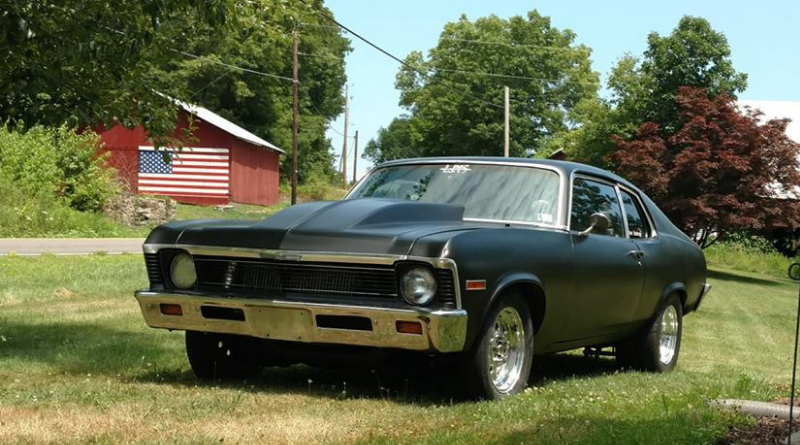
Our original plan for this post was to talk about how to avoid overheating at the drag strip. We wanted to get a closer look at the abuse put on the cars during passes, and then figure out what vehicle owners could do to make sure their cooling system setup actually stays cool. But after speaking with our good friend John Potucek at Keystone Automotive, who along with his turbocharged LS Nova has a lot of track experience, our findings actually led us in a different direction.
Overthinking It
“Honestly, most people overthink the cooling system setup — and they’re the ones with issues,” says Potucek. “Perfect example is with me and my 6-cylinder radiator. I’m on a budget, I had to use what I had.”
What does Potucek mean by “overthinking”? Well, a person might convince themselves that they need a massive radiator, state-of-the-art fans, and a huge volume pump to keep up with their engine. And sure, in some applications, this may be the case. But as Potucek explains, with a street/strip car, it’s not as much of an issue.
“What engine you’re running is a big factor,” he states. “How efficient is the setup? LS engines are hard to overheat (as long as you have no air pockets in the cooling system). I have friends running little Civic radiators keeping their 1000-hp LS engines cool. Now, a 1000-hp BBC might need a little more help, but a nice fan and proper shroud pulling through a quality radiator and you should be okay,” he adds.

While a top-of-the-line cooling system certainly isn’t going to hurt anything mechanically, the cost and labor required can take a toll on an owner’s wallet.
Keep It Cool
Despite this endorsement for a more laid-back approach, we really can’t blame people for stressing about their cooling system setup. Overheating an engine is something that I, and many others, have held in mind as one of the worst things you could do to your engine. Not only do you run the risk of blowing hoses and seals, but also some potentially irreversible damage can occur to cylinder heads. You could even end up ruining the engine entirely. That’s why, even with a vehicle that’s driven purely on the street, the temperature gauge is something most of us actively keep an eye on—especially with older vehicles.
I bring up older rides because a large portion of the vehicles driven at the track are exactly that, and older engines can be a bit scary for many people. I mean, if you’re driving a 1960s hotrod, the engine—even if freshly machined and built—is wearing technology from that era. But Potucek’s wisdom helps put our minds at ease once again. “You have to figure, you’re only going wide-open throttle for what—maybe 10 seconds? Okay, perhaps a little longer than that for some guys,” he laughs, “but not much.”

True, wide-open throttle can be absolutely terrifying under the right circumstances. Though, when only for a few seconds at a time in a drag-strip setting, the window for things to go wrong is quite minimal. So long as the cooling system is in a sound state, it’s not going to be pushed to the point where engine temperature reaches unmanageable levels. In fact, stop-and-go traffic situations on the way to the track are going to be more of a challenge when it comes to keeping the engine cool.
Regardless of what anyone says, though, newcomers still need a sense of direction.
Newbies to the automotive scene may be asking then, “Well, how the hell do I set up my cooling system, then?”
So, let’s take a brief moment to talk about how you should actually be tackling your cooling system setup — without overthinking it, of course.
Nix the Antifreeze
The first thing to know is that you can’t run antifreeze. “Most, if not all, drag strips do not allow you to run it,” says Potucek. “Drain and flush it out before you go. There might be an exception for daily driven stuff, but I do know some tracks will actually fine you or even kick you out because it is so difficult for them to clean up.”
Instead, you should run water in your cooling system, which will work just fine in any application. Now, keep in mind, that water does have a lower boiling point. So, when you’re not planning to run at the track, you will want to use coolant. Granted, it’s kind of a pain to swap, but rules are rules for a reason. (And the struggle associated with cleaning up anti-freeze is reason enough for most.)
Shop Smart
As far as the water pump and radiator go, you can really have a ball selecting your parts. Again, don’t feel obligated to reach for the most expensive options simply because you plan to drag race. Potucek’s car is one of those that you can ogle over for hours. (It’s pretty serious business.) So, the fact that he runs a factory radiator intended for a 6-cylinder engine shows that you’re okay staying with stock or one-step-up options, depending on the application of course.
It certainly helps to have a top-notch engine that isn’t prone to issues with heating, but as Potucek shared earlier, it’s only a few moments at a time that you will really be getting on the throttle. It’s also important to remember that you can overdo it when it comes to the cooling system. If you’ve ever picked up an aftermarket radiator for your car, you may have even run into the issue where the engine doesn’t get up to temperature until you installed a thermostat, which also shows that you don’t need to get nuts.
Practice System Maintenance
The best thing you can do is make sure your cooling system is sound. Check that your water pump gaskets, hoses, and radiator are fresh and leak-free. This is something all vehicle owners should be actively aware of, so they don’t leak water all over the track.
With that said, older vehicle owners may want to keep as much of the factory equipment present as possible for class reasons or resale value. To keep the mind at ease, having the radiator sent out to be pressure-tested and repaired is an option too. Of course, other problem areas like busted hoses or blown gaskets will be clearly visible as they leak.
The point is that you can save yourself money with your cooling system setup. As long as it’s sound enough for street use, it’s sound enough for the strip.


