
Auto Industry News: Monterey Auctions Post Big Numbers, California Reinforces ICE Ban, and Apple CarPlay Elbows Into Automaker’s Dashboard Space
Cash flowed like champagne in Monterey last week, where the wealthiest car enthusiasts shelled out a record $469 million to own some of the rarest and most exotic vehicles available. The Engine Block rounds up some of the notable highlights and trends from the collector car scene, and unpacks what these high numbers could mean for the market. Meanwhile, in another California city, legislators began hammering out a timeline for the state’s phase-out of ICE engine vehicle sales. The new rules are ambitious, but could speed EV adoption if other states follow suit. And lastly, Apple dropped a new version of CarPlay that takes a bite out of automaker’s dashboard real estate – and your private data.
All that and more in this week’s Auto Industry News.
Monterey Car Week Recap
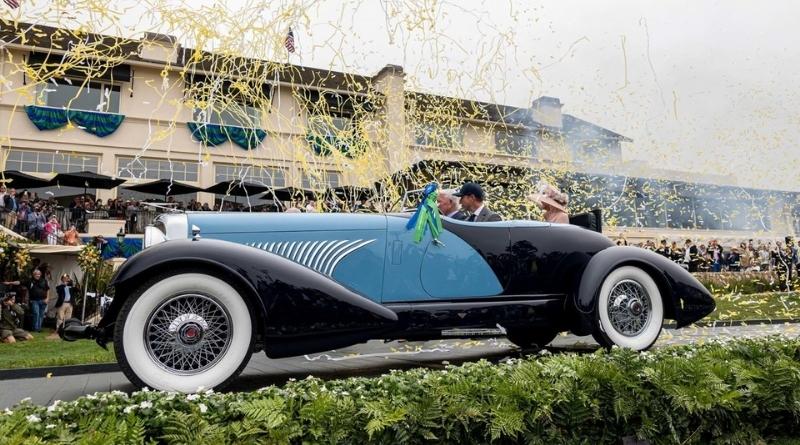
Every year, the uber wealthy – and those who wish to rub seersucker-clad elbows with them – descend upon Monterey for ten full days of true automotive excess. Nearly thirty car events take place throughout the week, from specialty shows and vintage races to nail-biting hammer sells from the world’s most renowned collector car auction houses. On the last day, attendees casually saunter down to the 18th hole of the famed Pebble Beach Golf Course where they continue to sip on expensive champagne while taking in some of the most rare, exotic and priceless rides at the Concours d’Elegance.
You would be excused for thinking that this year’s event might be a little more subdued, what with the record inflation and increasing economic anxiety many of us feel every time we make a quick stop at the grocery store. But, ah, no. Apparently, the folks who can confidently bid on $5M+ supercars do not share these same financial worries.
While this is not exactly shocking news to anyone with a brain (or an Instagram account), what is a little surprising is just how unaffected this upper crust seems to be – at least when it comes to collector car sales.

Big Money
The week’s auctions, held by RM Sotheby’s, Mecum, Gooding & Co, Bonhams, and the new Hagerty-owned Broad Arrow, saw a total $469 million in sales. That’s just shy of 19% higher than the previous record-breaking year (2015) which produced $394.5 million.
According to Hagerty, the high numbers are a result of “a higher quantity of high-quality cars” than years’ past, rather than a sign of the market peaking.
“Whereas in recent years the most significant and expensive models have traded hush-hush between private parties, all the talk of a hot market encouraged many sellers of the very best cars to test the auction waters,” writes Conner Golden.
And test they did, as the auction houses enjoyed an average 78% sell-through rate and an average sale price of $590,713. This year also saw 113 vehicles sell for more than $1 million – yet another record to add to 2022’s book.
While certain notorious marques dominated the scene (lookin’ at you, Ferrari), Hagerty noted a few interesting trends challenging expectations at this year’s Monterey auctions.
Monterey Trends
- Prewar beauties still sing a loud (and expensive) siren’s song, snagging some of the biggest sales of the week.
- Analog supercars were hot commodities, with nearly every one offered setting a new world record price.
- Generation X flexed its buying power in the collector car market, but Boomer taste still drives some of the highest sellers.
- As online bidding grows in popularity, live auctions are finding ways to enhance the in-person experience, either through unique attractions or technology. For example, RM Sotheby used a sealed bid process for its Ferrari F40 and bidders could monitor via app where their bid ranked in the list.

Despite the expensive feeding frenzy among bidders, it appears sellers practiced a little fiscal caution. James Hewitt, Hagerty’s Senior Data Analyst, notes that “the catalog auctions at Monterey this year had the highest percentage of reserve lots amongst Arizona, Amelia, or the previous two years of Monterey, and that points to sellers being uneasy which way the market will turn – but they sure aren’t having a fire sale.”
Did you know…?
IMG recently acquired a controlling interest in premier collector car auction Barrett-Jackson. As a host of many big-name events in sports, media, and fashion, IMG was drawn to Barrett-Jackson’s high-energy auctions. The company purchased a 55% majority stake in the auction house in $261M cash and stock deal.
California Buttons Up Plans to Ban Gas-Powered Vehicle Sales by 2035
While wealthy socialites bid on rare and exotic classics in Monterey, state legislators in Sacramento worked out new rules that would speed the transition to an all-electric California. The move could dramatically speed up EV adoption if other states follow suit.
Gov. Gavin Newsom originally announced his plan to ban gas-fueled vehicle sales by 2035 in an executive order two years ago. The new regulations aim to establish a roadmap by setting annual targets of zero-emission car sales that would increase over time.

This year, about 15% of the new cars registered in California were EVs. Per the new rules, that number would hopefully reach 35% by 2026, 68% by 2030, and eventually 100% by 2035. It’s worth noting that plug-in hybrids and hydrogen fuel-cell cars would count alongside battery electric vehicles toward those goals.
The move is ambitious to say the least, since getting drivers to switch from gasoline to electric is proving difficult. Prospective buyers cite a variety of reasons for their hesitation, but primary hang-ups seem to be the lack of abundant and reliable chargers as well as the ever-increasing purchase prices. (The average new EV hit $66,000 in June 2022 – a 3% increase year over year.)
As automakers pick up steam pumping out mass-market EVs, and the current administration’s new subsidies take effect, it’s likely we’ll see prices creep down and market adoption increase. Whether or not it will be to the degree California hopes will depend on a myriad of factors, including inflation, supply chains, and the semiconductor shortage (just to name a few).
In Other EV News
- Korean brands Hyundai, Kia, and Genesis are rolling out marketable EVs in rapid fire.
Collectively, the automakers plan to invest more than $16.5B in developing a swath of new models by decade’s end – 11 for Hyundai, 8 for Kia, and 6 for Genesis.
- Rivian ticked off its customers again, this time for cancelling its most affordable electric pickup truck.
The startup announced its intentions to cut the entry-level R1T, dubbed “Explore,” raising base-level prices by more than $6,000. The move affects all existing and future customers, including those who already put pre-orders in for the model.
- Ford is scrapping its ICE Transit connect for 2023.
By dropping its small, gas-powered option from the lineup, the automaker likely hopes it can steer customers toward either a more expensive full-size option or the new E-Transit electric van.

I Always Feel Like… Somebody’s Watchin’ Me
When Rockwell sang those lyrics in 1984, he likely couldn’t conceive of a future in which a Silicon Valley tech company could take control of every touchscreen in a vehicle – overriding automaker user interfaces and accessing vehicle and driver data in the process.
Frankly, Rockwell probably wasn’t spending his days thinking about little TV screens inside of cars to begin with, but here we are. And here is Apple big-brothering the hell out of them with its newest CarPlay rollout.
The tech giant says it worked with automakers around the world to design the new software, but none of these companies seem to be in a hurry to incorporate the software – which requires sacrificing quite a bit of valuable dashboard real estate.
CarPlay Gets More Integrated
In its current form, CarPlay replaces a vehicle’s infotainment display and essentially turns the center display into an iPhone home screen. Riders can access familiar apps for calls, messages, podcasts, and maps, or access a third-party app like Waze or Spotify. The interface looks roughly the same on any vehicle running it, which means “automakers relinquish brand differentiation,” explains Automotive News.
The latest version goes further though, to add to the ‘customer experience’ – while gobbling up critical user data in the process. A preview of the technology at the Worldwide Developer Conference showed how “CarPlay could replace an automaker’s instrument panel displays for speedometer, tachometer, temperature gauges and fuel or EV battery level,” continues the publication. “It also allows customizing an instrument panel using Apple-curated layouts, colors, backgrounds and dials.”

That will certainly be a tougher sell to automakers who are no doubt eyeing up connected car services as big revenue makers. McKinsey & Co. estimates vehicle data will be worth up to $400 billion annually by 2030.
It remains to be seen exactly how they could resist the tech giant, however. According to Emily Schubert, Apple’s senior manager for car experience engineering, nearly all cars on the road today offer CarPlay. What’s more, 79% of buyers “only consider CarPlay-capable vehicles” when shopping for new cars, she told Automotive News. Regardless, the company said it expects vehicles to be rolling with the new version by late next year.
In Other Car Tech News
- The new J.D. Power Tech Experience Index finds that more technology isn’t always better.
Among problems reported by new vehicle owners, in-vehicle technology features rank at the top. Fingerprint readers appeared to be the most wonky, with complaints also piling up for interior gesture controls, voice recognition systems and navigation systems.
- Tesla plans to raise the price of its “Full Self-Driving” to $15,000.
This move comes despite NHTSA investigations into the technology, and recent complaints made by the California DMV. Elon Musk said via Twitter that the price hike would take effect September 5 for North American customers.
The Engine Block is your one-stop source for any and all auto industry news. Keep an eye on our weekly round-up of enthusiast coverage, product reviews, vehicle spotlights, auto show/expo features, and more. Be sure to check back Friday for a rundown of the very best trails in the Southeast U.S.


