
Auto Industry News: Hyundai Pickup Truck Gets Green Light, Porsche 911 RSR Gets Redesign, Ford and VW Get Hitched, and Cars2Go Gets Robbed
Another busy week in the autosphere. The Hyundai pickup truck is officially happening. The Porsche 911 RSR made its world debut, sporting some fresh designs for 2019. Ford and VW take their relationship to the next level for EV production. And organized Car2Go thefts in Chicago unveil some big issues in this whole “network of cars” automakers keep promising us. Along with a jam-packed weekend in Formula 1 and NASCAR racing, there’s plenty to unpack.
Let’s get right down to it, shall we?
Hyundai Pick-Up Truck Really Happening
After several years of speculation, it looks like the Hyundai pick-up truck possibility is becoming reality. The South Korean automaker confirmed last week that it will be dipping its toes into the compact truck market, with a vehicle designed to appeal to non-traditional truck owners.
“It’ll be a very versatile vehicle that has the promise of creating a whole new class of buyers,” said Michael O’Brien, vice president of product, corporate and digital planning for Hyundai North America in an interview with Automotive News.
While the company execs have yet to give any solid specs or a release date, we can gather at least a few hints from the company’s truck concept that debuted at the 2015 Detroit Auto Show, and which started the rumors of a potential Hyundai pickup truck.

Dubbed the Santa Cruz, it was designed to appeal to city-dwelling millennials. Its 2.0-liter turbodiesel, making 190 horsepower and 300 pound-feet of torque, promised a fair amount of zip with fuel economy ratings in the upper 30-mpgs. And its sleek, crossover-style body kit ensured it could squeeze into smaller, urban parking spots. A clever tailgate, with an extendable “drawer” beneath the bed liner, added hauling versatility.
Capturing the attention of a younger market just realizing its purchasing power seems to be a priority for Hyundai. The company’s “adorable” little Kona crossover was millennial candy from the start, with targeted styling, pricing, and advertising.
The new Hyundai pickup truck is expected to hit dealers sometime between late 2020 and early 2021—and will likely be manufactured in the USA to avoid tariffs and the dreaded chicken tax. Time will tell if hip, urban millennials adopt the compact hauler in the way Hyundai hopes they will.
Porsche 911 RSR Redesigned for 2019
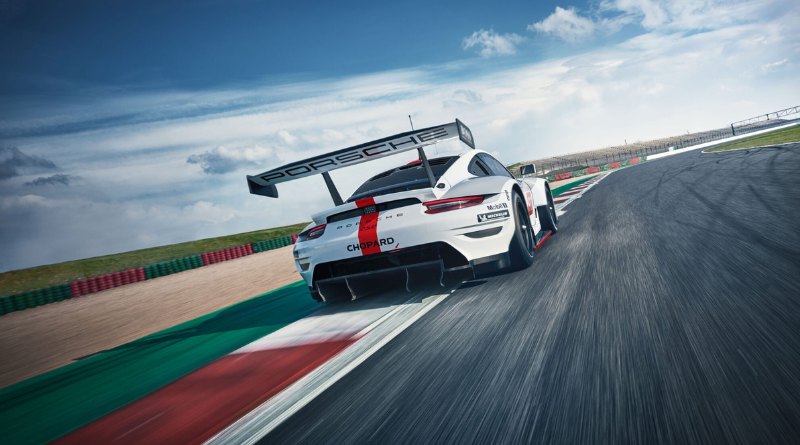
As we prepare for the imminent launch of another exciting mid-engine release, the 2019 Porsche 911 RSR showed off some fresh styling at its Goodwood Festival of Speed world debut.
There are some tailored changes shaking up this year’s model, mostly aimed at improving aerodynamics, speed, and—of course—endurance race trophies. After all, there’s no such thing as “If it ain’t broke, don’t fix it,” in the racing world.

Like the revolutionary 2017 model, the engine is midship to improve handling. The 4.2-liter naturally-aspirated six-cylinder gives drivers 507 horsepower, up from its predecessor. Although CNET reports that, “depending on the size of the restrictor plate required per racing regulations,” that number could creep up to 515-hp. Also upgraded is a wider rev-band for better power delivery and drivability.
In fact, Porsche boasts that this is the largest boxer engine ever dropped into a 911.
The new Porsche 911 RSR also sports a reinforced six-speed sequential manual gearbox, redesigned hood, front and back bumpers, front splitter, and repositioned exhaust pipes. Now exiting the vehicle from the sides, in front of either rear wheel, the racer sheds some weight and gains some aerodynamics.
It’s clear the Porsche 911 RSR impressed in its world debut, putting the ball squarely in the court of the competition in the coming months. Watch it kick off the next WEC season on September 1.
Ford and VW Take Partnership to the “Next Level”
After months of “will-they, won’t-they,” it looks like Ford and VW have finally tied the knot… at least when it comes to electric and autonomous vehicles.
After previously agreeing to a partnership creating electric work vans in Europe, the two automakers announced last week they are moving forward on a bigger and better joint venture. Ford will be using VW’s upcoming MEB platform to build electric vehicles, while VW will invest a total of $2.6 billion into Ford’s Argo AI autonomous division. Additionally, Volkswagen will purchase Argo AI shares from Ford for $500 million over three years and contribute its own in-house autonomous vehicle development unit. Meanwhile, Ford’s Argo will set up operations overseas and begin testing technology in European cities.

Ford plans to put more than 600,000 fully-electric cars onto the European market with the MEB architecture over six years—a calculated move to survive in Europe, as emissions standards continue to tighten.
Ford and VW will remain “independent and fiercely competitive in the marketplace,” the Detroit automaker’s CEO Jim Hackett said in a statement. However, Hackett added, “Unlocking the synergies across a range of areas allows us to showcase the power of our global alliance in this era of smart vehicles for a smart world.”
To put it simply, this is a massive economic move for both Ford and VW.
As more companies start to team up and prepare for the electric/hybrid future of the auto industry, partnerships of this type are going to become the norm, so Ford and VW should skip the honeymoon and get right to work.
Car2Go Theft in Chicago Reveals Some Harsh Truths About Car-Sharing
After car-sharing service Car2Go decided to stop conducting manual background checks in a bid to attract new customers, it opened themselves up to a whole new user base—a ring of thieves in Chicago who successfully heisted about 75 cars.
According to Bloomberg Businessweek, savvy thieves exploited Car2Go’s app and stole dozens of vehicles from the company’s Chicago location on April 15, then claimed the vehicles were theirs when employees were sent to get them back.
After two days and many failed attempts to retrieve the vehicles, the company got the Chicago Police Department involved. By midweek, Car2Go suspended its service in Chicago altogether, waving the white flag and acknowledging it couldn’t figure out how to tell a legitimate customer from a thief.
(I’m no business expert but that seems like not-a-great-look for a company whose business model relies on smartphone use.)

“This was a unicorn incident for us as a company,” Car2Go spokeswoman Kendall Kelton told Bloomberg Businessweek. “We’ve never seen this type of fraudulent activity at this scale ever, ever.”
Despite the company’s insistence that this is an isolated incident, Bloomberg details how car-sharing networks in general have suffered their fair share of fraudulent activity. BMW’s car-sharing network ReachNow had similar issues in Brooklyn in 2016, and Enterprise Holdings Inc. ceased operations of its own car-sharing service in Chicago in 2017, due to “high rates of fraud and vandalism.”
As future vehicles are slated to be part of a network-of-networks in the coming years, automakers must track and exterminate these bugs in the system if it is ever to be truly viable. The Car2Go fiasco should serve as a wake-up call for both consumers and the auto industry alike.
Around the Circuit
Formula 1
Lewis Hamilton returned from a disappointing fifth place finish last race to win the British Grand Prix for a record sixth time. He finished ahead of fellow Mercedes teammate Valtteri Bottas and Ferrari’s Charles Leclerc.
His seventh win in the last 10 rounds, this finish gives Hamilton a resounding 39-point lead ahead of the next closest racer, even securing a bonus point for his stunning track record time on the final leg.
Crossing the line a full 25 seconds ahead of his nearest competition, Hamilton dominated this one from the jump. “I can’t tell you how proud I am to be here today in front of my home crowd, and my family, too,” said Hamilton draped in his home nation’s flag following his 80th career win. “You would think you would get used to something like that, but it feels like the first time.”
Next up for Formula 1 racers is the Mercedes-Benz Grosser Preis Von Deutschland, July 26-28.
NASCAR
After being denied victory due to a poorly-timed pit call last week, Kurt Busch rallied in a two-lap overtime sprint to finish ahead of younger brother Kyle and third place racer Erik Jones for the Monster Energy Series victory.
Beating out his brother by only .076 seconds, he scored the closest ever win at a 1.5-mile intermediate speedway so far this season and the first for his team this season.
Next up for the Monster Energy Series racers is the Foxwoods Resorts Casino 301 at NHMS on July 21.
Another week of XFinity series racing, another dominant win for Cole Custer. Crossing the finish line at Kentucky 1.651 seconds ahead of Christoper Bell and third place finisher Tyler Reddick for his seventh career win, despite some late pressure from Bell, Custer led a race-high 88 laps.
Next up for XFinity series racers in the Lake Region 200 at NHMS on July 20.
And, despite leading only 40 of 150 laps, Tyler Ankrum took advantage of a Brett Moffitt fuel stop with less than two laps left to score his first ever Gander Outdoor Truck Series victory this week at Kentucky Speedway.
Finishing ahead of Stewart Friesen in second, Harris Burton in third and Moffitt in seventh, this is Ankrum’s first win in twelve career races. “I can’t believe it. This is a dream come true,” said the 18-year-old. “One of my biggest faults is I’ve always doubted myself. Tonight, I kind of felt all that wash away.”
Next up for the Gander Outdoors Truck Series is the Gander RV 150 at Pocono Raceway on July 27.
How do you think a Hyundai pick-up truck will be received in America? Do the Car2Go thefts change your view on future vehicle technology? Let us know in the comments!


