
Auto Industry News: GM Sues FCA, Tesla Cybertruck Makes Terrifying Debut, and U.S. Senators Want Stricter Self-Driving Rules
Never a dull moment in the auto industry, eh? GM files a RICO lawsuit against FCA, adding fuel to the UAW fire and potentially endangering FCA’s merger with PSA Groupe. Elon Musk’s much-awaited Tesla Cybertruck debuts to mixed reviews and a botched reveal. And government officials are finally seeing the negative consequences of fast-tracking self-driving technology.
Here we go.
GM Accuses FCA of Labor Corruption; Files Federal Lawsuit
General Motors has filed a blockbuster federal racketeering lawsuit against Fiat Chrysler, in an ultra-aggressive move that compounds a terrible last few months for both automakers.
The suit alleges that “corrupted” collective bargaining between FCA upper management and UAW officials led to preferential treatment, bribes, and unjust bargaining benefits. GM claims that FCA gained an edge due to these dirty tricks, scoring perks like lower labor costs, more temporary workers at lower wages, and other operating processes advantages during 2009, 2011, and 2015 contract negotiations.
The suit even alleges that former CEO Sergio Marchionne, who died unexpectedly back in July 2018, was a key figure in orchestrating the scandal in an attempt to force a merger with GM.

Marchionne isn’t the only executive to get caught up in the shuffle this week, either. UAW president Gary Jones abruptly resigned on Wednesday, Nov. 20, mere hours after GM launched its lawsuit. This is the first time in the union’s 84-year history that a president resigned midterm.
Additionally, over the weekend, UAW Region 5 Director Vance Pearson submitted his resignation as well. He faces federal charges of embezzlement of union funds, mail and wire fraud, and money laundering.
This Could Drag On…
Despite the unprecedented allegations, thousands of jobs, and billions of consumer dollars at stake, FCA doesn’t seem too concerned. The automaker was quick to dismiss the merits of the lawsuit, claiming it’s just another attempt to derail merger talks with French automaker PSA Groupe, a deal that would make them the fourth-largest automotive group in the world.
“The GM lawsuit will be dealt with in appropriate places, but as we’ve said already it is absolutely groundless and so it does not worry us,” FCA Chairman John Elkann told Reuters. “Looking at how teams are working, both in FCA and PSA, I am encouraged to say that between now and year-end, we’ll have a binding memorandum signed.”
Time will tell if FCA’s confidence is merited or not. And GM will have its work cut out too. As a private party claiming RICO, the automaker will not only need to prove the racketeering took place, but it must also prove damage was done—and that’s tricky in a competitive market as complex as the automotive industry. Regardless, it should carry on for awhile and keep 2020 news coverage interesting.
Terrifying Tesla Cybertruck Has Disastrous Launch
So, let’s be clear about something right off the top. On paper, the Tesla Cybertruck is a dream come true as far as pickup innovations go. The single motor, fully-electric vehicle offers 250 miles of range, a tow rating of 7,500 pounds, and clocks 0-to-60 in 6.5 seconds. Another dual-motor version is capable of moving 10,000 pounds, has 300 miles of range, and can reach 60 mph in 4.5 seconds.
Additionally, it boasts 120-volt and 240-volt charging ports, an onboard air compressor, and a 30x cold-rolled steel construction, providing unmatched stability and making the whole thing virtually bullet-proof. Musk has also indicated that the Tesla Cybertruck will include “an option to add solar power that generates 15 miles per day, possibly more,” as well as a matte-black color option. “Full self-driving capabilities” are on the docket too—at an added cost—and “will be continuously upgraded through over-the-air software updates,” as they “evolve.”

All of these specs are undoubtedly huge innovations in a vehicle category that’s—while one of the most popular in the U.S.—often stagnant and short on fresh ideas. Tesla CEO Elon Musk said it best himself on stage during the reveal: “We need something different. We need sustainable energy now.”
Now that we’ve gotten the good out of the way, let’s talk about the bad.
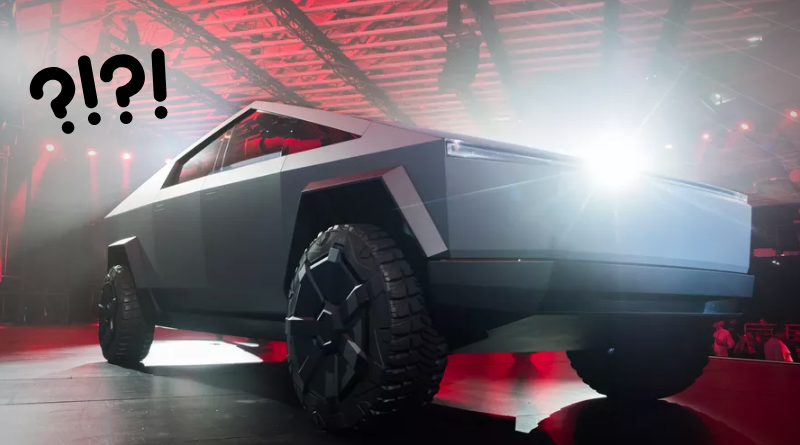
Am I crazy or is this thing just a butt-ugly truck? It looks like a massive metal trapezoid with swagger-jacked Batmobile styling, lacking the distinctive separate cab and bed that defines pickup truck design. I get that we’re breaking the mold here, but it’s hard to make sense of this one.
And let’s talk about the window thing. Did you happen to see the lead designer smash the supposedly “unbreakable” windows, followed up by Musk pointing out “but it didn’t go through”?? He then had to go forward with the rest of the presentation standing in front of not one but TWO smashed “indestructible” windows. If you haven’t seen the video yet, check it out here. It’s cringe-humor at its best.
Yup. Sledgehammer impact on door cracked base of glass, which is why steel ball didn’t bounce off. Should have done steel ball on window, *then* sledgehammer the door. Next time …
— Elon Musk (@elonmusk) November 25, 2019
Despite the disastrous unveiling though, many still remain undeterred. The Tesla Cybertruck has reportedly already received 200,000 orders. That’s probably due to the eye-popping price of the base version Cybertruck at only $39,900.
Experts are mixed on how this new and innovative truck will be received, however.
“It will be a niche product at best and poses no threat in the pickup market as we know it today,” Matt DeLorenzo, senior executive editor at Kelley Blue Book, told CNN. “The other downside is that this truck will have no federal tax credits by the time it comes out.”
With production set to start in late 2021, we’ll have to wait a bit to see if the Tesla Cybertruck is all it’s said to be. My bet is that this thing will be a blip on the EV radar as more and more companies bring their A games.
U.S. Senate Committee Calling For Stricter Self-Driving Rules
As more automakers toy with self-driving technology, it’s becoming harder to ignore the challenges that engineers and designers face as they attempt to roll out higher levels of autonomy. Challenges that include very real dangers to pedestrians.
That’s why members of the U.S. Senate Commerce, Science and Transportation Committees, citing the 2018 self-driving Uber crash that killed a pedestrian, have called for the President to make self-driving guidelines mandatory. (Currently, automakers complete safety self-assessments and they are not required to publicly release the results.)

From the Detriot News: “Over 80 companies are currently testing automated vehicles on the public roadways and we need to know that everyone has safety at the forefront of their decisions,” said U.S. Sen. Maria Cantwell, D-Wash., the top-ranking Democrat on the panel.
“Some of these self-assessments read more like a marketing brochure than a critical assessment,” Cantwell continued. “So, I do think it raises a question about what kind of structure we have in place to make sure that these safety safeguards are not just voluntary and that they have to be met, and make sure that regulators are playing their role.”
In a nutshell, self-driving technology is really difficult to develop and impossible to perfect. And, right now, it’s still in its infancy—as the Uber crash demonstrated. This committee is an example of government regulation doing some good. We should listen to what officials in D.C. have to say and make self-driving safety rules standard practice.
I would rather wait a bit longer for self-driving tech, then get plowed over by a robot because I was outside a crosswalk.
Around the Circuit
Global Auto Salon – Riyadh
Traditional racing season might be ending but car show season is just hitting its stride. As the LA Auto Show continues through Sunday on home base, the first-ever Global Auto Salon in Riyadh, Saudi Arabia is wrapping up.
Featuring world-class hot rods, muscle cars, exotics, classic cars, trucks, sports compacts, race cars and other specialty vehicles on display, visitors also have access to hundreds of exhibitors showcasing their brands and newest products as well as dozens of industry experts and celebrities.
With over 450 vehicles, 250 vendors, and big names like Magnaflow, Air Design, ROUSH, and General Motors leading the charge, this show aims to unite car enthusiasts on an international scale. Even NHRA made the trip, bringing drag racing to a global stage. This is a great opportunity for American car culture to test out some uncharted waters and a welcome attraction for enthusiasts residing in a country that is just beginning to open its doors to outsider trends, goods, and even tourists.
Ford v Ferrari
Racing may have been in short supply this weekend, but big screen action was ready to feed enthusiast need for speed. We’re talking about Ford vs. Ferrari, of course—the bona fide hit that has dazzled audiences and critics alike.
With a 92 percent score on Rotten Tomatoes, 81 percent on Metacritic and 8.3 on IMDb, the movie tells the true story of American auto designer Carroll Shelby and British driver Ken Miles’ plan to beat Enzo Ferrari at the 24 Hours of Le Mans in France in 1966.
With a star-studded cast featuring the likes of Christian Bale and Matt Damon, the film is not only a hit cinema experience but a fantastic showcase of auto racing culture. From the realistic portrayal of the thrills and dangers of old-school auto racing to the sepia-toned aesthetics, Ford vs. Ferrari is a marvel.
Auto enthusiasts should carve out some time to go to the theater and see this on the big screen. Bring some popcorn, a big soda and have a great time with a fast-paced, high-intensity film that celebrates old-school auto racing.


