
Auto Industry News: Ford Number 1, Subaru Sales Slump, Tesla Teasing, & New NMCA Event
Ford kicks off another month with record sales numbers, cementing its position as the country’s number-one automaker. Meanwhile, Subaru reports a highly unusual slump compounded by waning inventory, Toyota makes headway on a multibillion-dollar battery manufacturing plant, and Tesla’s Elon Musk lights up Twitter for the umpteenth time. As for the other bigwigs, it looks like yet more decisions are coming down the pike regarding gas-powered cars and phase-out timelines.
But – while we still have those fuel-drinking, engine-roaring monsters… NMCA announced a new series partnership this week that is sure to serve up plenty of high-octane fun.
NMCA Muscle Car Nationals Unveils 2022 Drag & Drive Shootout
Fanning the enthusiast flames for the New Year, NMCA Muscle Car Nationals announced the Drag & Drive Shootout in partnership with Sick the Magazine. The magazine is dedicated to souped-up rides like rebuilt Camaros, making it a perfect fit for NMCA’s events. NMCA says the series will feature three long-haul street car events in 2022, with Gear Vendors serving as official sponsor. Thus far, NMCA says appearances at the invitational include cars driven by stars like multi-time Hot Rod Drag winner (and Sick the Magazine founder) Tom Bailey, social media influencer Alex Taylor, and two-time Drag Week champ Dave Schroeder.

The three Drag & Drive Shootouts take place at the following stops in 2022:
- March 17-20: NMCA Muscle Car Mayhem at Bradenton Motorsports Park, Bradenton, Florida
- August 25-28: NMCA All-American Nationals at Summit Motorsports Park, Norwalk, Ohio
- September 22-25: NMCA World Finals Presented by Chevrolet Performance at Lucas Oil Raceway, Indianapolis, Indiana
In addition to the eight-car shootout, NMCA also named Sick the Magazine as the presenting sponsor of the All-American Nationals at Summit Motorsports Park.
Tickets are available for the Bradenton show, with more information dropping early next month for Norwalk and Indianapolis. All three races are on NMCA’s event page.
Ford Clinches No. 1 Selling Automaker Spot Again
It’s a nice feeling when you’re number one, and Ford knows that feeling well. The Blue Oval recently announced that it was the best-selling automaker in the U.S. for November. According to Ford, that’s now three consecutive months the manufacturer has been number one in the country. In its detailed report for November 2021, Ford also pointed out that the company hasn’t hit this three-month streak since 1974.
The automaker attributes its solid numbers to a few different factors, such as the sales of its new EVs – the Mustang Mach-E and F-150 Hybrid (3,088 and 4,767, respectively). Overall, Ford tallied 11,116 EV sales in November, a bump of more than 153%.

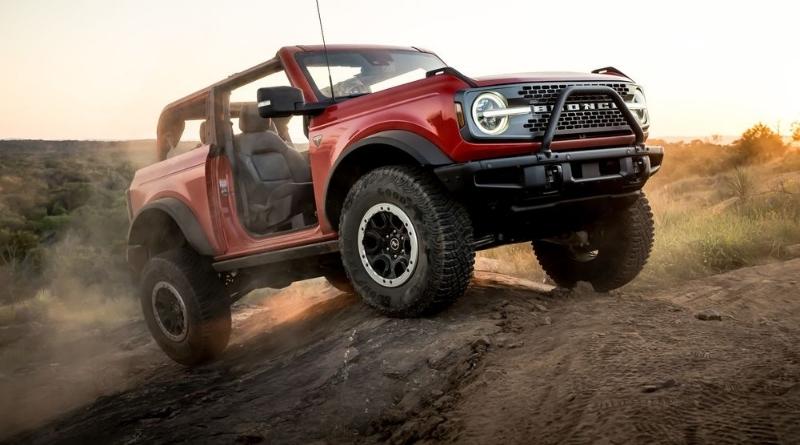
“Ford was also the only major U.S. automaker to beat year-ago sales results for November,” said Andrew Frick, vice president, Ford Sales U.S., and Canada. “Retail sales were up 4.5 percent over a year ago, with SUVs having a best-ever November sales performance on record sales of our all-new Bronco family. We expect growth to continue, thanks to adding an additional 74,000 new vehicle orders in November.”
The Head Honcho
Combined with its other vehicle categories, Ford said it sold 158,793 vehicles in November, increasing over last year in all categories. The automaker’s truck sales jumped 4.6%, and SUV sales increased 20.8%. Ford’s long-time favorite SUV line, the Bronco, also had its highest combined sales since launching, a whopping 19,773 SUVs.
In the last year, Ford benefited from new strategies to get around global challenges and what it claims are unavoidable price hikes. The manufacturer adopted a “build-to-order” strategy that focuses on building cars based on actual orders and reservations, rather than rush to dump cars on dealer lots.
If the automaker’s luck holds out through December, Ford could stand to outsell GM in EVs for 2021. While GM rolled out big plans for heavy-duty investments in EV technology, the automaker also continues to play catch-up since it recalled its entire Bolt line after widespread fire hazard concerns.

Subaru Hits a Bump in the Road
What good is a sale if you can’t deliver the product? Subaru is trying to answer that difficult question right now, as it recently found itself dealing with a sales slump for the first time in more than a decade. The automaker is coping with dwindling inventory that reportedly has it operating on a five-day supply – a considerable drop from its typical 45-day cushion.
A recent report by Automotive News shows Subaru’s backorders sitting at about 45,000 vehicles in the U.S. That’s a heavy backlog, especially since it is over the 36,000 vehicles U.S. Subaru dealers sold in October.
In a Dec. 1 sales report, the automaker noted a 35% decrease in vehicle sales (33,045 vehicles) for November 2021 compared to 2020 and a 3% dip in year-to-date sales compared to the previous year. While Subaru didn’t directly mention the inventory shortage, execs did hint at the strain it was putting on dealers.
“Alongside our retailers, we’re working hard to get vehicles to consumers amid the ongoing production shortage as the demand for Subaru remains high,” said Jeff Walters, senior vice president of sales. “We know that in 2022, our all-new electric vehicle, the 2023 Subaru Solterra, will be top of mind for car buyers looking to power their adventures with an all-electric SUV complete with signature Subaru quality, safety, and reliability.”

New Market
Whether Subaru can generate enthusiasm about its new Solterra likely hinges on whether it can find a way back to consistent production. Right now, Automotive News reports the company is adding about 10,000 units a month to its backlog. Subaru CEO Tomomi Nakamura told the outlet that he projects it’ll take “about a year” for the manufacturer to recover. By then, he said he hopes Subaru can move to a 30-day supply instead of its current razor-thin 5-day supply.
Subaru’s sales track record was relatively strong until the “COVID Year” hit. The microchip shortage has been a significant contributor to the manufacturer’s slowdown. Even if domestic microchip manufacturing recently proposed by the Biden Administration catches traction, the U.S. still needs to build and staff those facilities. And it’s unclear who’d be first in line for distribution once the chips are ready.
While some automakers are playing catch-up, Toyota’s on a tear with its EV campaign.
Last week Toyota said it was building a $1.29 billion battery plant in Liberty, North Carolina. The plant will produce batteries for the manufacturer’s growing line of electric vehicles. The new plant is scheduled to start production in 2025. According to the manufacturer, it will supply lithium-ion batteries for 800,000 EVs annually. Over time, Toyota says it wants to expand the plant to “at least” six production lines and churn out 1.2 million batteries annually. The move is also expected to bring 1,750 jobs to the area. Toyota has been on a tear with its EV expansion plans and eventually said it hopes to increase its battery production globally to 70 lines across the world.

Tesla Teases Diagonal Driving on the Cybertruck
Ah, the Cybertruck. Tesla’s EV truck offering that’s running with the tagline “Better utility than a truck, with more performance than a sports car.”
The Cybertruck was supposed to drop this year, but over the summer, the company said it was pushing the release back until 2022. Even with the delay, the manufacturer is drumming up quite a bit of excitement over the vehicle.
Most recently, Tesla CEO Elon Musk went to Twitter to tease the first production run of the Cybertruck. Musk said the first run of the vehicle for sale will be a four-motor version. According to Musk’s tweet, the variant will feature independent, ultra-fast response torque control of each wheel. That news prompted questions from Tesla nerds who asked Musk whether the four-motor Cybertruck would be able to drive diagonally like a tank, to which he replied “yes.”
There’s speculation Tesla may scrap its single-motor version with the news of this variant, but no official confirmation yet. Originally the truck was supposed to come in three options: single, dual, and tri-motor AWD, so whether the manufacturer commits to four different versions remains to be seen.
The hype around the Cybertruck has also ramped up interest around accessories like a pop-up camper explicitly built for the Tesla vehicle. Last week, the CyberLandr, a $50,000 (!) truck camper that sits in the bed of the Cybertruck, hit a whopping $100 million in preorders. The camper is built by the startup firm Stream It. The company said it’ll produce and deliver the product in tandem with the Cybertruck.

Biden Orders End to Gas-Powered Government Vehicles by 2035
To the excitement of some automakers and probably the chagrin of some Capitol Hill lawmakers, President Biden signed an executive order last Wednesday ending government purchases of gas-powered vehicles by 2035. The government reportedly owns upwards of 650,000 cars and buys around 50,000 every year. Right now, less than 1% of its vehicles are EVs.
For government-acquired light-duty vehicles, the administration said those vehicles would be emissions-free by 2027. The move is part of a larger plan to reduce the federal government’s emissions by 65% by 2030 and move to electricity from carbon-free and non-polluting sources. Eventually, Biden’s plan calls for the federal government to reach net-zero emissions by 2050.
Mixed Reactions
The announcement drew praise from groups like the Alliance for Automotive Innovation (which represents VW, Toyota, and GM) and UAW President Ray Curry. Curry said the order “seizes the opportunity to preserve, create and increase the opportunity for good union jobs for decades to come.”
Meanwhile, some parties said they think the plan needs legs before it’ll mean anything. And some even argue the timeline to an entire EV fleet should be shorter.

Dan Becker, director of the Safe Climate Transport Campaign at the Center for Biological Diversity, told Reuters that waiting for 14 years was “an awfully long time when we have some electric vehicles already, and companies are trying to decide now whether to make just promises or actually make electric vehicles.”
That goal would also prompt the government to make good on its current plans to ramp up domestic microchip production since, as we’ve established, no chips equals no cars.
The Engine Block is your one-stop source for any and all auto industry news. Keep an eye on our weekly round-up of enthusiast coverage, product reviews, vehicle spotlights, auto show/expo features, and more. Be sure to tune in Friday for a rundown of must-have car accessories for dog owners!


