
Auto Industry News: Brexit Battle Causes Auto Industry Headaches, Chicago Taxes Ride-Sharing Services to Battle Traffic, and Megan Meyer Makes NHRA History
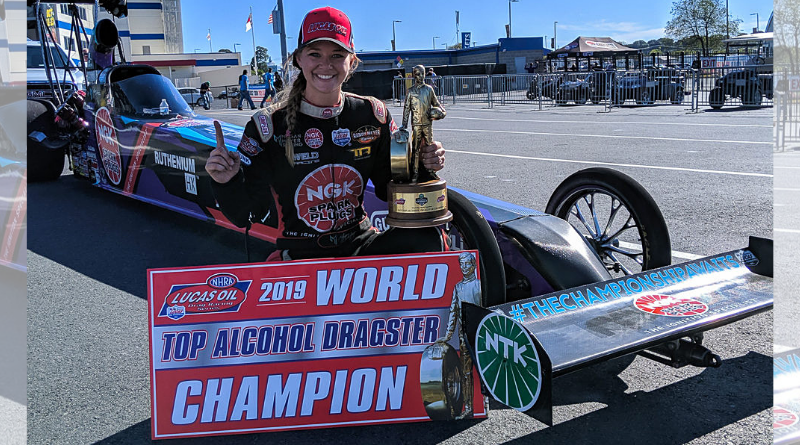
The hopes for a swift and organized Brexit on October 31 looks unlikely as MPs vote for another delay. We break down the economic toll the UK’s withdrawal has had on the country’s auto industry—and what it could mean for American carmakers as well. On the home front, Chicago plans a tax hike on ride-sharing services in hopes of tackling its traffic woes. And 25-year-old NHRA dragster, Megan Meyer, makes history as she becomes the first woman to win the Top Alcohol Dragster World Championship.
Brexit Drags On
For those unfamiliar with the full background of the initial exit vote, the fallout since, and what’s next for Britain after the exit: here’s a recap of the important details.
The Newest Development
As the deadline for Brexit looms closer, the United Kingdom’s much-debated withdrawal from the EU grows ever more contentious. Having pushed the deadline back three times already, it’s looking likely to happen yet again after MPs voted for further delay on Friday.
While current Prime Minister Boris Johnson has been adamant that Britain will leave the EU with or without a deal come October 31, Parliament’s recent vote threw a wrench into those plans. As required by law, Johnson sent a letter to the EU council president asking for a three-month extension that would push the withdrawal date back to January 31.

Although, in an act of defiance, he refused to sign the letter and followed it with a second letter detailing why he disagreed with Parliament. He also expressed confidence that UK officials won’t actually need the extension and will successfully pass Brexit legislation before the initial October 31 deadline.
UK Auto Industry Feels the Burn
Brexit has, understandably, been a hot topic in the UK since the 2016 referendum that put it into motion. Many “Remainers” oppose a withdrawal from the EU—particularly with no deal in place—due to the massive impact it would have on the British economy.
And one of the industries that could suffer the most? Automotive.
British automakers saw production drop by a full fifth in the first half of 2019, thanks to global sales downturns, intentional widespread factory shutdowns back in April (the originally scheduled Brexit departure date), and a 70 percent investment drop in Britain’s car sector.

Automakers have had to pump hundreds of millions of dollars into contingency plans, placing them far behind global competitors in industry R&D. In fact, according to the Society of Motor Manufacturers & Traders (SMMT), carmakers have already spent roughly $365 million on mitigating no-deal Brexit risks, by securing warehouse space and stockpiling parts. That’s three times more than they invested in the first six months of the year on industry-related challenges like EV/AV technology and environmental sustainability.
What Could “No-Deal” Mean for the Auto Industry?
While any exit plan is going to cause ripples, the real scenario that has people on edge is a “no-deal” withdrawal. It’s an unlikely outcome, as British politicians fight to ensure it doesn’t happen, but here are some possible ramifications for the auto industry if it does:
… A no-deal Brexit means an end for tariff-free trade with the rest of Europe—a market that buys up more than half of British car exports—disrupting production and supply chains.
… The SMMT estimates that resulting tariffs would cost UK automakers $5.5 billion a year, costing the overall industry an astounding $63,300 a minute.
… Thousands of the UK’s 186,000 factory production workers would find themselves without jobs.
Brexit hasn’t even occurred yet and, already, Honda announced plans to close a major English manufacturing facility that employs 3,500 people and pumps put 150,000 Civics a year. Nissan, too, has scrapped plans to build a factory on British shores. Ford is closing its Welsh plant by 2020. And French automaker, PSA, has threatened to close down its Ellesmere Port factory and move production to a new location in the south of Europe.
… And for Americans? Well, the US and UK are major investors in each other’s economies—it literally pays for our friends across the pond to be successful. Plus, Britain is the fifth-biggest market for US exports.
Unfortunately, it seems no matter how you slice it, Brexit is an ankle weight dragging British automakers. Whether or not that anchoring will be short-lived or drawn-out remains to be seen.
Ride-Sharing Services to Pay Up as Chicago Mayor Tries to Curb Traffic with New Tax
Still grabbling with California’s passage of AB5, it appears ride-sharing companies like Uber and Lyft are now facing some financial woes in the Windy City.
Mayor Lori Lightfoot is moving ahead with a plan to increase taxes on individual ride-share trips, as well as any rides that begin or end in downtown Chicago.
“Our city, like many others across the nation, has experienced skyrocketing congestion growth due in part to the rapid growth of ride-hailing companies, making it increasingly difficult for those who rely upon Chicago’s streets for commerce or transportation, and plaguing our downtown,” said Lightfoot in a statement.

By increasing the city’s Ground Transportation Tax on single ride-sharing trips from $0.60 to $1.13 and decreasing the tax on shared trips from $0.60 to $0.53, the proposal hopes to incentivize the ride-share companies’ car-pooling features. Additionally, all trips occurring in a designated downtown area during the hours of 6 a.m. and 10 p.m. will see a jump in price, in a bid to encourage the use of existing public transportation.
Lightfoot estimates the plan will infuse Chicago with about $40 million in new tax revenue. Of that, a portion will be invested into the city’s public busing system—a much-needed resource for many working-class citizens.
Obviously, Uber and Lyft are less than thrilled.
“The mayor’s proposal amounts to by far the highest ride-sharing fee in the country and will take money out of the pockets of riders, who rely on apps to get around, and of drivers—half of whom live in the South and West sides of the city,” said Uber spokeswoman Kelley Quinn. “As a candidate, the mayor said she was committed to equity, yet she is proposing to hike taxes by nearly 80 percent on underserved communities who do not contribute to congestion and lack reliable access to transportation.”
The city disagrees, recently publishing data that shows nearly half of Chicagoans’ monthly ride-share trips are concentrated in a select few areas that are wealthy and already crowded.
Only time will tell if the plan is successful. It goes into effect January 1.
Megan Meyer Makes History
Megan Meyer has become the first woman to win a Top Alcohol Dragster World Championship, narrowly beating out points-rival Troy Coughlin Jr. last weekend in the final round of the NTK NHRA Carolina Nationals.
After finishing third place overall last season, Meyer ran a great race over the weekend to cap off her dominant season. She captured the historic title with her best run of the weekend—a 5.149, 281.48—edging out Coughlin’s 5.169, 280.80.
After the race, Meyer dedicated the win to her father, her team, and all of her supporters.
“This is for my dad, Randy, who does so much for us and for our whole team, and all the people who support us,” said Meyer. “I love this class … How cool is it that it was me and T.J. [Coughlin]? We’re just a couple of bracket racers who came up the Sportsman ranks together and now we’re at the top. We’ve even shared the same Super Comp dragster before. This just means so much to us.”
Around the Circuit
NASCAR
Denny Hamlin capped off a dominant display in the Monster Energy Series’ Hollywood Casino 400 this weekend with a first-place finish, beating out Chase Elliott and Kyle Busch. Despite leading 153 of 277 laps of the race, Elliott caught up to Hamlin late, pushing him to the end for an exciting finish. Only crossing the checked line .128 seconds ahead of Elliott, this was a tight win for Hamlin.
Elliott’s second-place finish locked up his spot in the Round of 8 in the playoff series, a pretty good consolation prize for the runner up.
Next up for Monster Energy series is the First Data 500 on October 27 at Martinsville Speedway.
Brandon Jones took advantage of some late-race chaos to capture his first-ever Xfinity Series victory, while Cole Custer and Tyler Reddick exchanged blows on pit road.
Jones sped ahead with 16 laps left, holding off Chase Briscoe and Tyler Reddick along the way before crossing the finish line .272 seconds ahead of his competitors and denying the eight remaining playoff drivers an automatic bid into the next round.
Race fans, however, might have shifted their focus off of Jones and onto the scuffle between Custer and Reddick post-race. After contact from Reddick’s car forced Custer into the outside wall on the final restart, forcing Custer to finish 11th, the two exited their cars and ended up grappling on the ground.
Xfinity Series drivers will look to rebound next week in the O’Reilly Auto Parts 300 on Saturday, November at Texas Motor Speedway.
NHRA
Top Fuel. Billy Torrence beat out Jordan Vandergriff in the two’s first meeting in the final round, overcoming a starting line disadvantage and chasing his opponent down for the win.
Funny Car. Despite a late rally from Bob Tasca III, Matt Hagan held on to capture the second finals win, moving him up to fourth place on points and nabbing his third win of the season and 32nd of his career.
Pro Stock. Facing off for the 21st time in their careers, Greg Anderson beat out Jeg Coughlin, turning things around after entering this weekend in eighth place.
Pro Stock Motorcycle. Taking out points leader Andrew Hines in the semifinals and Eddie Krawiec in the final round, Jerry Savoie locked in a valuable win in the Texas heat this weekend, becoming the first racer in the 2019 Countdown to win more than one event.


