
Auto Industry News: Big Recalls, New Vehicle News and More Bureaucratic Buzz
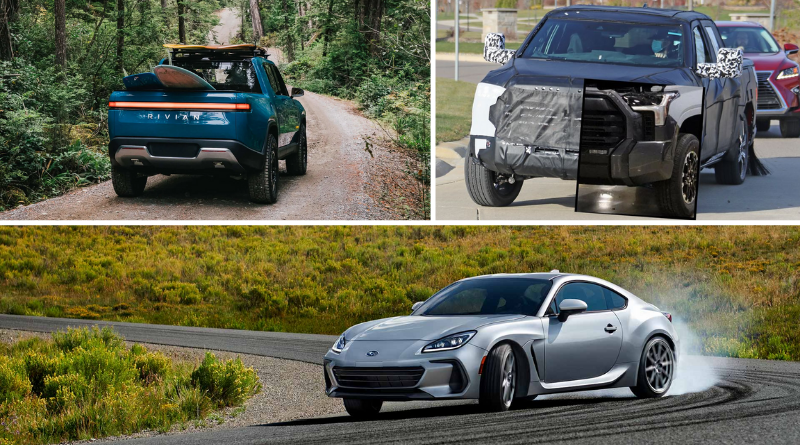
Major recalls across several brands dominated headlines this past week, affecting millions of vehicles. On the bright side, we have some buzzy new rides to be excited about, including the all-new Subaru BRZ, 2022 Toyota Tundra, and Rivian R1T electric truck. As for the men in suits, GM flip-flops on its support of Trump-era emissions roll-backs and offers buyouts to Caddy dealers hesitant to sell EVs. Plus, much-needed moves are being made on laying legislative groundwork for autonomous cars.

Denso Fuel Pump Recall
Last month, Denso – one of the world’s largest automotive parts suppliers – announced a recall of a low-pressure fuel pump used in more than two million vehicles. Last week, another 1.5 million vehicles joined the recall list. Personal injury lawyers already smell blood, launching class action lawsuits against automakers who used the defective part.
According to the manufacturer, the low-density impellers in the pumps may deform from fuel absorption, causing the impellers to strike the outer parts of the fuel pumps and render the part inoperable. All that word salad means affected consumers could be looking at anything from a stubborn check engine light to a vehicle that won’t start or one that stalls in the middle of traffic.
We don’t yet know exactly which vehicles have been impacted, though the pump has been used by Toyota, Honda, Ford, Mitsubishi, and Subaru. Affected model years are 2013-2020. While auto manufacturers will be reaching out to customers, it’s always best to check for yourself – especially if you purchased your ride on the used market. Click here to access the NHTSA website’s recall lookup.
Tesla Recall and NHTSA Investigation
Fresh off massive news of joining the S&P 500, Tesla faces an issue with about 9,000 Model X SUVs from 2015-2016. It appears, due to a lack of primer, pieces of the vehicle’s body can detach while driving. While there are no reports of any injuries or accidents, auto pieces popping off the vehicle certainly presents a hazard to other drivers.

Tesla also assures drivers the car parts in question are purely cosmetic and won’t affect the vehicle’s ability to function. While that’s reassuring, it would still be a bummer to drop all that money on a Tesla only to have the cosmetic applique at the front of the roof come flying off while you’re zipping down the highway. The company says owners will be contacted and will have to bring their vehicles in for service.
In more bad news for the EV company, the NHTSA opened an investigation into 115,000 2015-2017 Model S and 2016-2017 Model X vehicles after receiving 43 complaints about failure of the left or right front suspension fore links – an issue Tesla itself confirmed existed in a 2017 service bulletin.
While this is just an investigation into one part of a single vehicle under Tesla’s brand name, it is still an issue worth noting, if not just for the timing. Tesla surely would have preferred to coast on its recent good stock PR – but such is life for automakers who want to play in the big leagues, eh?
GM/Takata
GM is the latest automaker forced into a massive recall thanks to Takata’s seemingly never-ending air bag debacle. More than seven million big pickups and SUVs worldwide are included in the recall. The decision will cost GM an estimated $1.2 billion – roughly one-third of the company’s net income so far this year.
Exploding Takata inflators caused the largest auto recall in U.S. history, beginning in 2013 and affecting vehicles with model years dating back to the late ‘90s. To date, at least 63 million inflators have been recalled in the U.S. and about 100 million inflators worldwide. The craziest part? The U.S. federal government estimates 11.1 million inflators are still faulty. A reported 27 people have died as a result of these dangerously exploding inflators, 18 of those were American.

It took the NHTSA more than four years to come to this most recent decision, but the agency believes this latest round of recalls will finally put the Takata saga to bed. To GM’s credit, the automaker will not fight the decision, despite stating it believes the included vehicles are safe.
GM will recall full-size pickup trucks and SUVs from the 2007 through 2014 model years, including the Chevrolet Silverado 1500, 2500 and 3500 pickups. Also covered are the Chevrolet Suburban, Tahoe and Avalanche, the Cadillac Escalade, GMC Sierra 1500, 2500 and 3500, and the GMC Yukon.
The company has 30 days to give NHTSA a proposed schedule for notifying vehicle owners and starting the recall. You can read more details on the report and GM’s decision over at the Detroit Free Press.
Subaru Unveils All-New BRZ
When you hear “Subaru,” what do you think of? Sturdy, ultra-safe design? Rugged, reliable all-wheel drive perfect for snow and slush? Odometers hitting 250,000+ miles? How about, the everyman’s pure sports car?
For 2022, Subaru packs more power under the hood of its sleekly redesigned BRZ, delivering 228 hp and 184 lb-ft of torque complements of a new 2.4-liter flat-four-cylinder engine. Sitting a full half inch lower to the ground, the second-gen sports car offers a low center of gravity and a tight-responsive feel behind the wheel. Its sloped front hood, low-set grille and vented front fender make it as aerodynamic as possible, while a small fin at the back of the car allows for stability at speed.

An updated, modern cabin lives up to its fresh-faced exterior. A 7-inch fully digital gauge cluster highlights the tachometer and offers an integrated digital speedometer readout, while an 8-inch infotainment touchscreen dominates the center stack. Red-accented and contoured bucket seats add to the sporty look, while a low seating position with good sight lines adds to the sporty feel. In true Subie style, safety is ensured via plenty of driver-assistance tech.
The new Subaru BRZ will go on sale early fall of 2021.
Spy Shots – 22 Toyota Tundra Breaks Cover in Metro Detroit
 We got a sneak peek of the next-gen Toyota Tundra, set to drop for 2022. This is the models’ first full redesign since 2007. It’s pretty clear that the new Tundra is set to compete with other full-sized truck offerings like Ford, Chevy, and Ram.
According to SEMA, “The next Tundra will ride on an all-new platform, internally called F1, that is said to be flexible enough to accommodate all Toyota body-on-frame pickup and SUV models globally. That means the platform will underpin not only Tundra, but also the Tacoma and the smaller Hilux not sold in the U.S. or Canada, as well as SUV models like the 4Runner and Sequoia.”
While the exterior remains hidden on the prototype, a large six-bar grille, LED headlamps and towing mirrors can be made out, as well as what looks like large sunroof and an exhaust switched to the driver’s side. A skirt obscures the rear underbody, leading to speculations of a potential new suspension.
SEMA suggests the Tundra will replace its gas 5.7L V8 with a hybridized twin-turbocharged 3.5L V6 setup that could make upwards of 455 hp. A new 10-speed auto transmission is slated for the new pickup.
According to Car and Driver, Toyota has yet to officially confirm the existence of the new 2022 Tundra but a spokesperson vaguely touted the importance of the full-size pickup segment.
Rivian R1T and R1S Configurators Now Live on EV Brand’s Website
Rivian announced its new electric R1T pickup and R1S SUV are now live on the automaker’s online configurator, giving fans and prospective buyers a chance to build an EV of their dreams and place a reservation.
Poised to battle for market share and consumer dollars with the likes of the Hummer EV, the Rivian R1T and R1S are available in two trims: Explore Package and Adventure Package. Both offer a standard battery pack of 300 miles range, with plenty of goodies and add-ons to increase capability, experience, and utility. The R1T pickup starts around $67,500 and the R1S around $70,000.

GM Turns on Trump, Supports California Emissions Standards
In another never-ending saga – this time between the Trump Administration’s EPA and California – GM changed course last week, saying it no longer supports plans to prevent the state of California from setting its own fuel emission standards.
In a letter to environmental groups, GM Chief Executive Mary Barra said the automaker would be “immediately withdrawing from the preemption litigation and inviting other automakers to join us.”
The change of intention, while seemingly abrupt, makes sense. GM wants to align itself with President-elect Joe Biden, whose incoming administration has made clear that EVs will be a major priority. Why would GM continue to fight against its own self-interest after already announcing plans to increase spending on EVs and autonomous vehicles by 35% with the goal of boosting sales?

Barra continued GM’s embrace of the incoming administration, saying she believes “the ambitious electrification goals of the president-elect, California, and General Motors are aligned, to address climate change by drastically reducing automobile emissions” and that she was “confident that the Biden Administration, California, and the U.S. auto industry, which supports 10.3 million jobs, can collaboratively find the pathway that will deliver an all-electric future.”
This heel-turn is a crushing blow for the Trump administration’s plan to roll back Obama-era fuel-efficiency standards. It is also a move that other originally-supportive industry giants like Toyota, Nissan, Kia, and Subaru will be keeping an eye on. We wouldn’t be surprised if other automakers followed GM here, but we’ll see what happens in the coming days.
Cadillac Dealers Given Buy-Out from GM
Pulling out of that lawsuit isn’t the only thing GM has done this week to support a clean, green shift. The automaker is apparently so committed to the future of sustainable, fully-electric EVs that it is straight up paying dealerships that aren’t willing to sell them to go away.
Cadillac dealerships who are unwilling to make mandatory upgrades to their dealerships to accommodate for the all-electric future, can instead opt for a half a million bucks to drop the brand. Such dealership retooling can cost upwards of $200,000 and includes adding a charging infrastructure and training employees on how to handle and sell electric vehicles. According to The Drive, GM’s buyout option could translate to more than 5-10 years of new Cadillac sales for some low-volume dealers.
This move comes as the Cadillac brand is set to release its first ever fully-electric vehicle, the Lyriq crossover. It’s clear GM is high on prospects in the Cadillac EV game, pushing up the release of the Lyriq by nine months, committing to going fully-electric by 2030, and planning to invest heavily into electric and autonomous budgets through 2025.
If the luxury brand can make the ever-more important shift to EV a swift and effective one, that could be the key to GM capturing the market share and consumer dollars that every EV brand is fighting for. We’ll see if it works.
Regulators Receive a Roadmap Towards Smart Self-Driving Vehicle Policies
As much as self-driving cars terrify some people, it’s become clear in the last few years it’s an idea with staying power. Waymo is robot driving all around metro Phoenix, Cruise is set to deploy driverless cars in San Francisco by the end of the year, and established companies like Google and Uber have had autonomous vehicles on the roads in some capacity for years now. The key now is to figure out how to regulate the burgeoning industry.

That’s why the World Economic Forum, or WEF for short, released a comprehensive roadmap for how they see the future of legislating the autonomous vehicle industry.
The key takeaway from the report, is that the industry can’t be treated as a monolith. No two autonomous driving tech companies work exactly the same, despite being in the same field. The report stressed the need for legislators to understand the markets those companies are in and base their legislation around them at local levels.
“Safety needs to be defined by the operating environment,” Tim Dawkins, the lead author of the report, said. “That, unfortunately, is not going to allow interoperable licensing or permitting approaches. It’s just the reality of development. But if we agree on common terms and at a baseline level that a learner’s permit is a first step, that’s where we see this framework fitting.”
It’s impossible to argue against the idea that Phoenix and Pittsburgh are two very different markets. However, we agree a baseline federal legislative framework is needed. Self-driving cars are already hitting the streets and there are essentially zero guidelines in effect right now.
There’s no time to twiddle our collective thumbs and hope that companies put the safety of human beings above their profit margins. We’ve seen how well that’s worked out in the past…


